Methods · Entry 03
Tape as an instrument
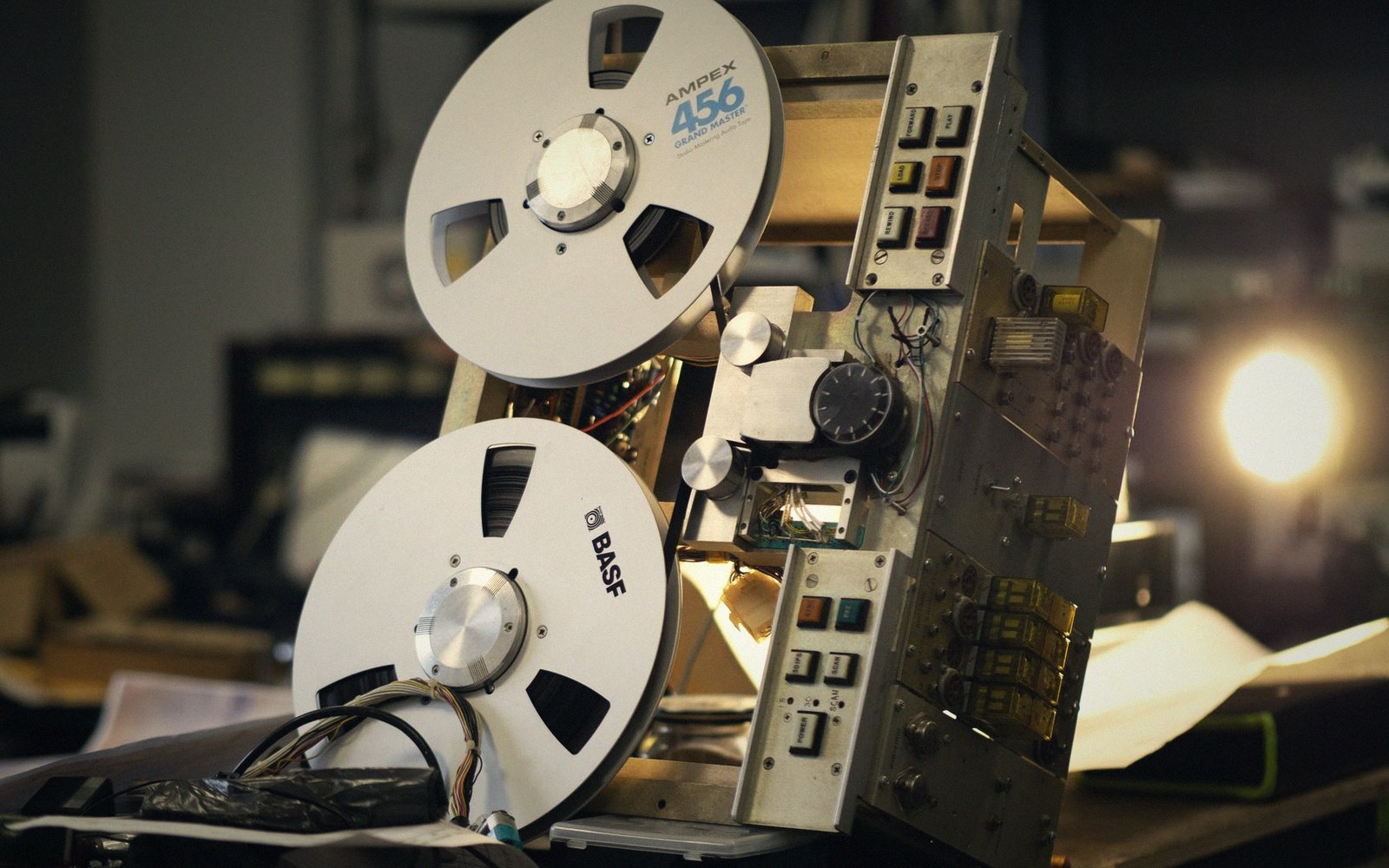
Splicing, reversing and running at the wrong speed: the physical operations that turn a recording medium into something you perform.
The loop as a voice
Magnetic tape has no inherent pitch, tempo or duration. Those properties emerge from the decisions made during and after recording — and those decisions, when treated as performance rather than post-production, constitute an instrument in their own right. The techniques are mechanical, not algorithmic: a razor blade, a chinagraph pencil, a splicing block, a capstan running at the wrong speed. The results are irreversible until they are re-recorded, which is part of what makes tape feel like playing rather than editing.
The foundation is the loop. Cut a length of tape, splice the tail back to the head, and the machine becomes a sustained tone generator — or a breath, a chord fragment, a few seconds of room noise that repeats indefinitely. Length determines pitch only when the loop is short enough that the ear fuses the repeats; longer loops, three seconds and above, are perceived as rhythm and texture rather than tone. This distinction matters: a composer choosing loop length is choosing which perceptual register to occupy, not simply how often something recurs. Duration as a decision operates here too, at the level of the inch rather than the album side.
The machine adds its own character. A loop threaded through a Revox or an Ampex will acquire bias noise, head saturation and slight speed instability — wow and flutter — that a digital repeat never introduces. Splice points, if not cut precisely on the zero-crossing of the waveform, click. For practitioners in this tradition, those artifacts are not failures to be suppressed; they are the grain of the medium, equivalent to the breath noise of a wind instrument or the bow rosin of a string instrument.
Speed, reversal and layer
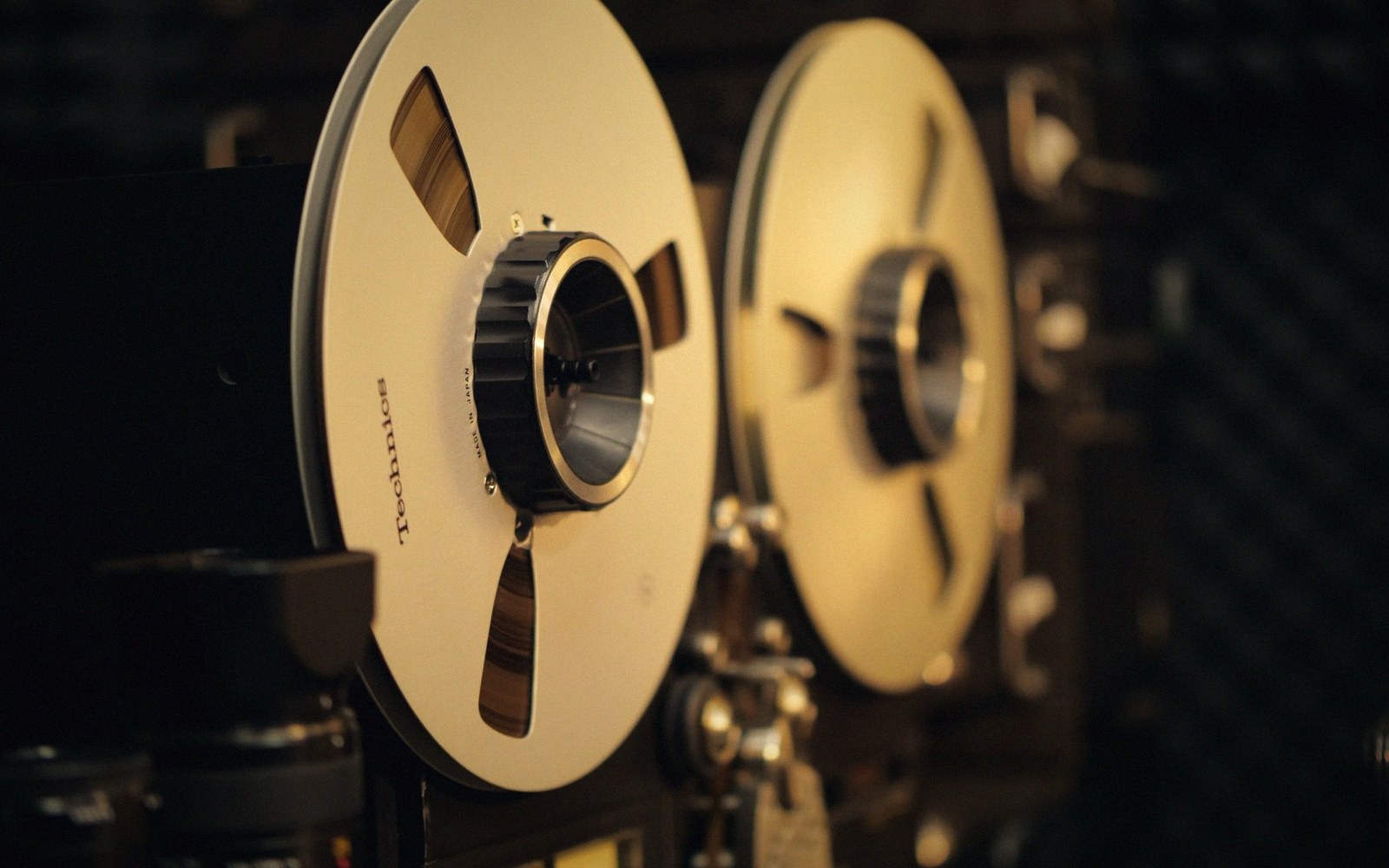
Halving the playback speed drops a recording by an octave and doubles its duration; doubling it raises and compresses by the same ratio. Neither operation requires any signal processing. On a variable-speed machine — a Nagra with its capstan adjustment, or a professional deck fitted with a varispeed control — the change is continuous and can be performed in real time, the operator's hand on the control functioning as a pitch-bend ribbon. The source material becomes unrecognizable long before it reaches its speed limits: a spoken voice at one-quarter speed yields low rumble and a cadence that sounds geological; birdsong at double speed crosses into insect territory.
Reversal, meaning physically flipping the tape and replaying it, inverts every transient attack. A piano note, which in forward playback has an immediate percussive strike followed by a slow decay, becomes — reversed — a swell that arrives from nowhere and cuts off sharply. The asymmetry of natural sounds becomes useful raw material: almost anything recorded forward has a directionality to its envelope, and reversal exposes that directionality by destroying it. This is why reversed tape sounds uncanny even when the original source is completely mundane.
Layering multiple tape machines transforms the process into an ensemble act. Stockhausen's work in the Cologne studios of Westdeutscher Rundfunk in the 1950s, or the work later done in the BBC Radiophonic Workshop, established the basic grammar: run several loops simultaneously, each at its own speed, and use the mixing desk as an instrument of real-time balance and mute. The desk operator becomes a performer. The output is not a fixed composition to be approved and archived; it is a performance that happens to be recorded. Pierre Schaeffer, working at the RTF studios in Paris from 1948 onward, described the phonogène — a keyboard-controlled variable-speed tape device — as evidence that recorded sound had become a new class of material with its own plasticity. His term musique concrète names the principle: sound gathered from the world, then physically worked rather than notated.
The distinction between tool and instrument is slippery but real. An editing suite is a tool when it serves a predetermined outcome. The same machines operated under performance conditions — where the move of a hand commits a change, where the loop running on the take-up reel cannot be untouched — belong to a different register entirely. The medium, at that point, is playing back.