Sources · Entry 02
Surface Noise
The crackle on a shellac disc is not interference — it is a layer with its own rhythm, density and grain.
The Crackle as Material
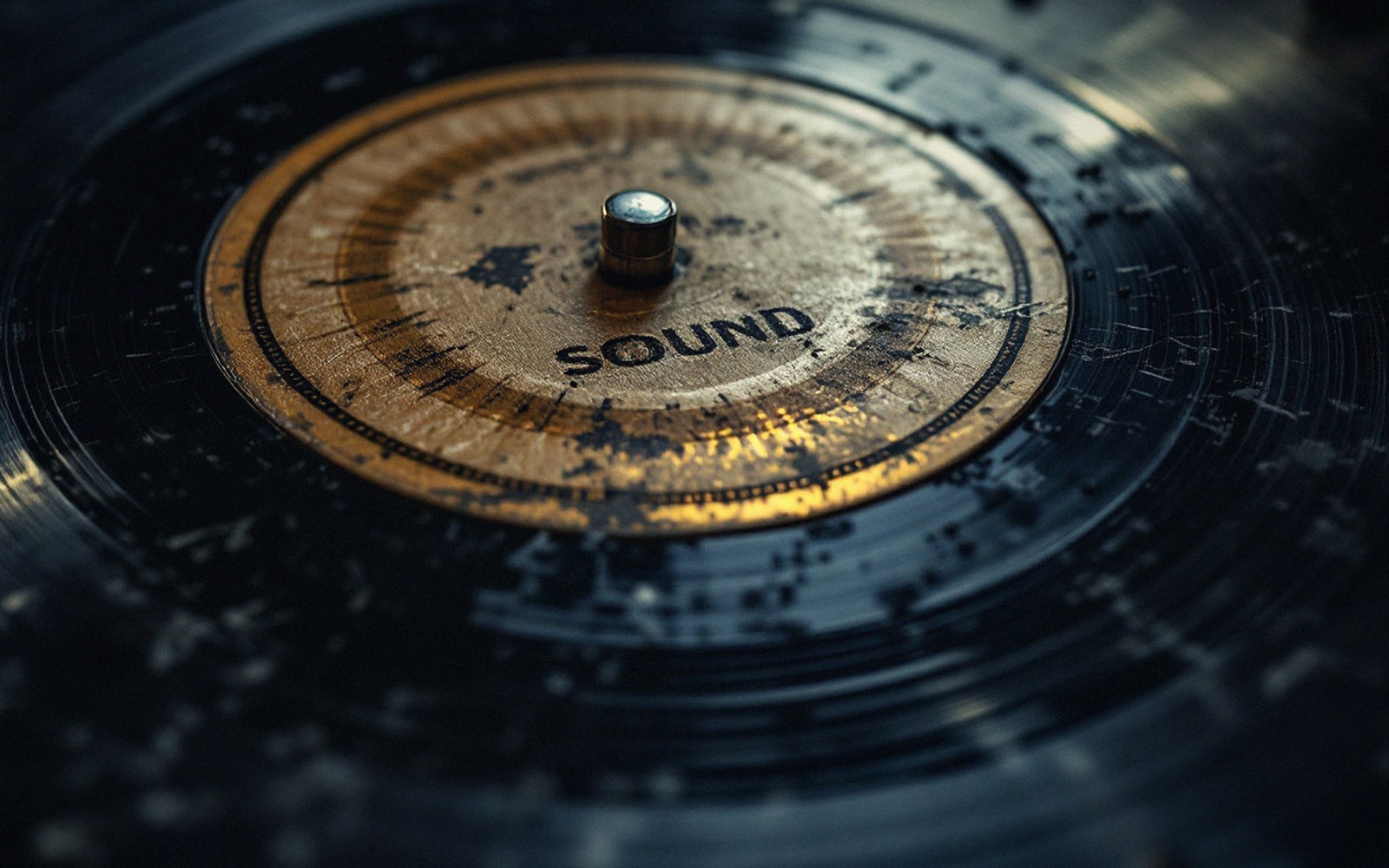
Pressed at 78rpm from a compound of shellac, limestone filler and carbon black, vintage discs carry a noise floor that is nothing like tape hiss. Tape hiss is stationary — spectrally stable, texturally flat. Surface noise is event-driven. Every pit, groove irregularity and dust particle produces a discrete click or crackle timed to the rotation: roughly 1.3 revolutions per second at 78rpm, so the noise has a periodicity, a subtle pulse underneath its apparent randomness.
That periodicity is the thing. Cut a shellac transfer into a loop and the crackle begins to feel rhythmic rather than accidental — a soft, irregular snare against whatever else occupies the frequency space below it. The carbon black filler pushes the noise into the upper midrange and lower treble, roughly 2–8kHz, which is also where consonants live in speech and where the attack of acoustic instruments sits. Surface noise does not fill the low end; it sits on top of the signal like a second texture, and a careful pass through a high-shelf EQ reveals just how structured that texture already is before any processing begins.
Worn grooves amplify this. A disc played many times develops micro-damage along the groove wall, and a steel or fibre stylus tracking that damage generates a crackle with a longer, denser envelope per event — less a click, more a low fizz with a slow decay. The condition of the disc, the weight of the tonearm, the compliance of the stylus: all of these become compositional variables when the turntable is operated as a source rather than a playback device.
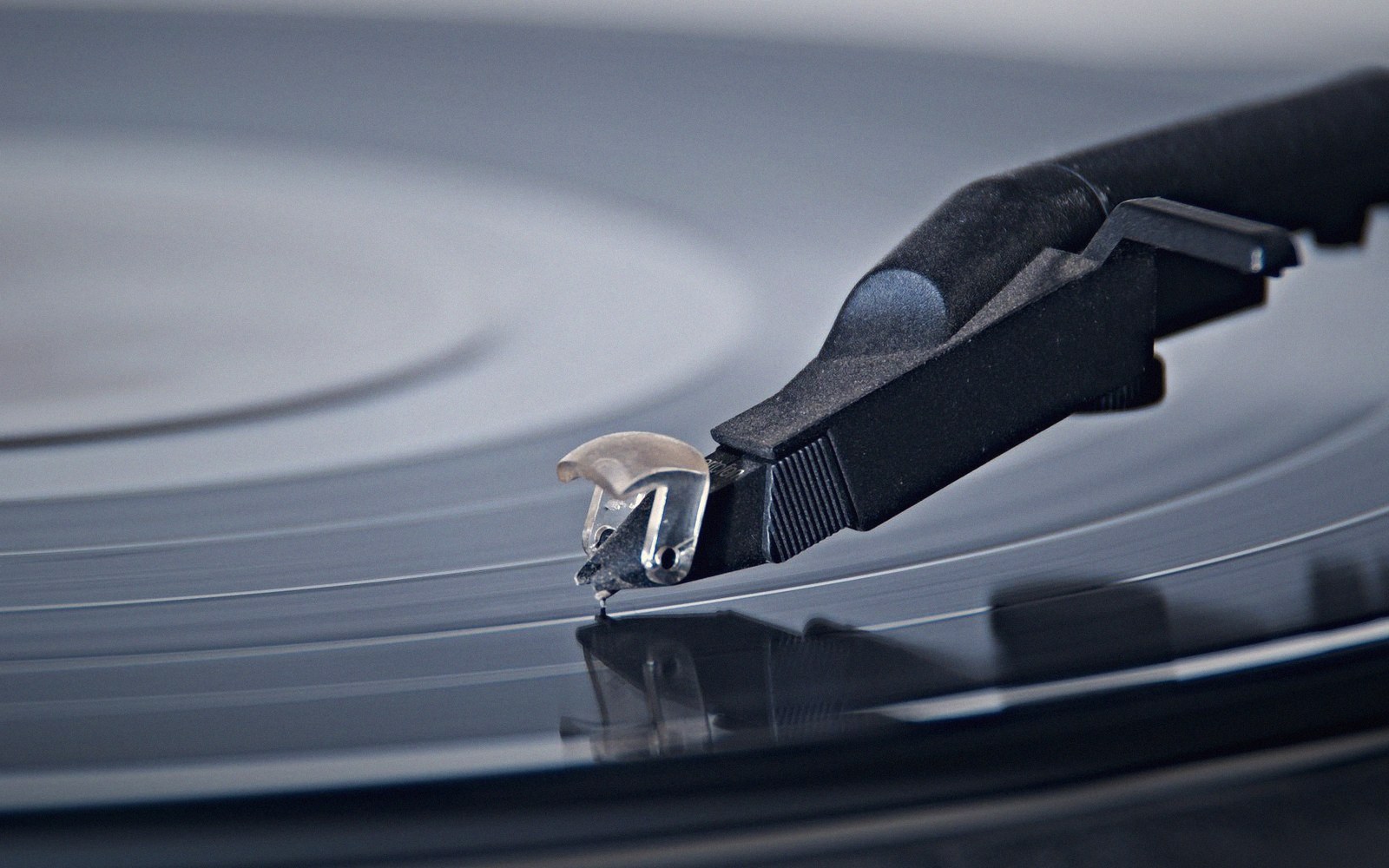
Recording the crackle in isolation — lifting the pickup arm mid-groove, capturing the near-silence between musical phrases, transferring a locked groove — yields raw material that can be layered under other sources without bringing the original musical content with it. The noise and the music it once framed are separable; the noise outlives its original context and enters the piece on its own terms. Layered against a bowed string or a field recording, it introduces the suggestion of age, distance and medium — not as mood, but as information about how the sound arrived.
The crackle is, in this sense, the record's autobiography: a log of every play, every handling, every year on a shelf. When that log becomes a layer in a new piece, provenance stops being archival bookkeeping and becomes something audible.