Sources · Entry 01
Shellac
The 78 rpm disc as a source: loud, narrow-band, and full of surface noise — and all three qualities are what make it useful.
What the Format Actually Carries
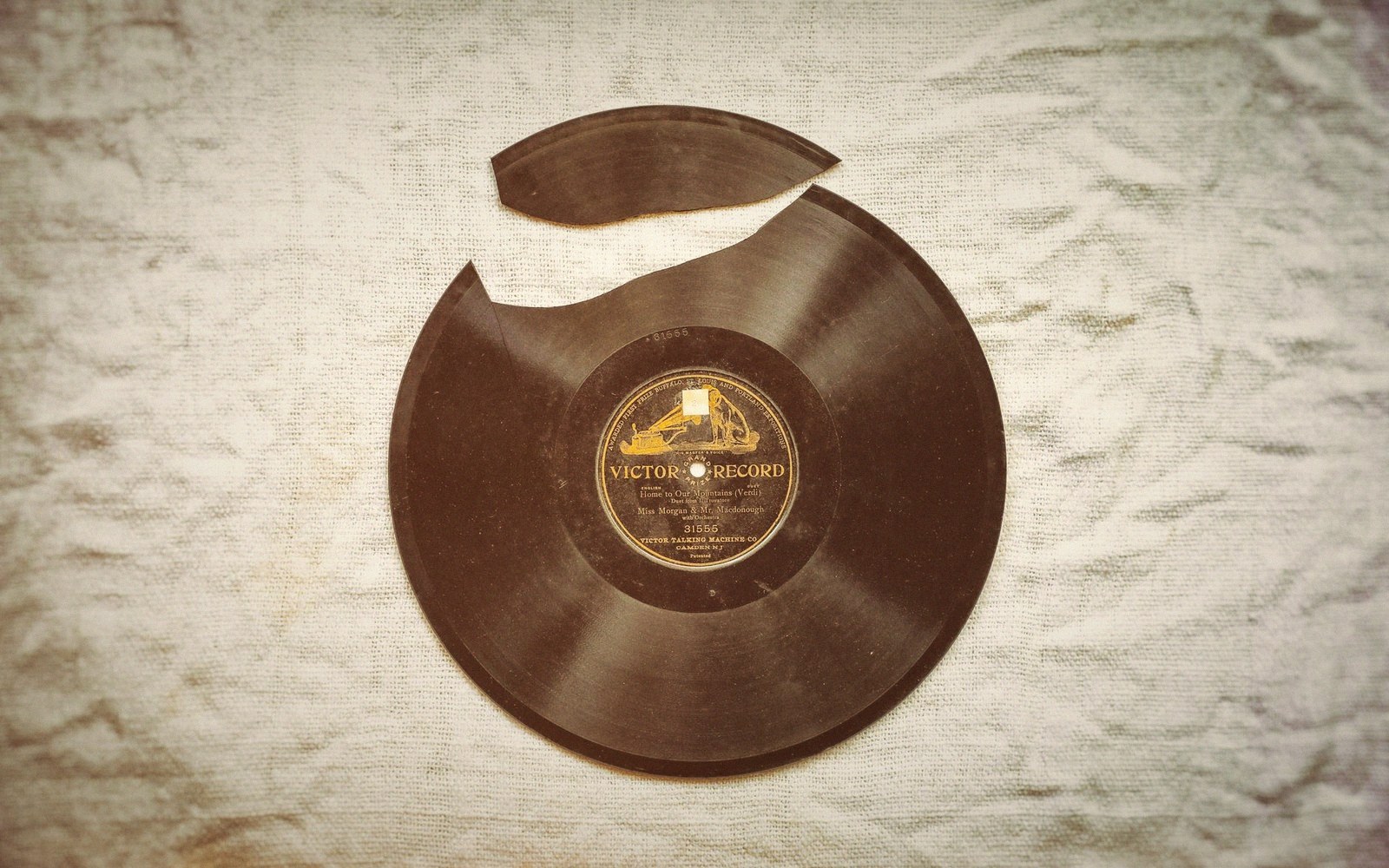
A 78 rpm shellac disc does not sound like an analogue master tape slowed to its essence. It sounds like itself: a frequency range that rarely climbs above eight or nine kilohertz, a noise floor built from pressed mineral dust and the stylus tracking it, and a mid-range presence that sounds almost laryngeal, as if the music were being sung at close range into a tin room. These are not failures of the medium. They are the medium.
The compound itself matters. Standard shellac pressing uses a blend of the resin secreted by the lac beetle (Laccifer lacca), along with limestone filler, cotton fibre and carbon black. That filler is coarse, and when a steel or fibre needle rides the groove at 78 revolutions per minute, the contact between stylus and compound produces the characteristic surface noise — not smooth hiss but a granular, irregular crackle, closer in texture to a slow fire than to tape hiss. Run it through a microphone preamplifier without any filtering and the crackle occupies a specific frequency band, has its own internal rhythm, and layers with the recorded signal rather than simply masking it. Used as a source, it arrives already textured.
The bandwidth restriction changes everything about how a disc can sit in a mix. Instruments recorded before roughly 1950 via acoustic horn or early electrical microphones were themselves rolling off the extremes; the disc format then compressed what remained further. What survives is a band of frequencies that slots into the middle of an audio spectrum without competing for the low end or the high. A prepared guitar sustaining in the bass register and a field recording opening up above ten kilohertz can both sit alongside a 78 transfer because neither occupies the same space. The narrow band is a filter that has already been applied at the source — no equalisation needed to make room for it.
The Signal and the Noise Together
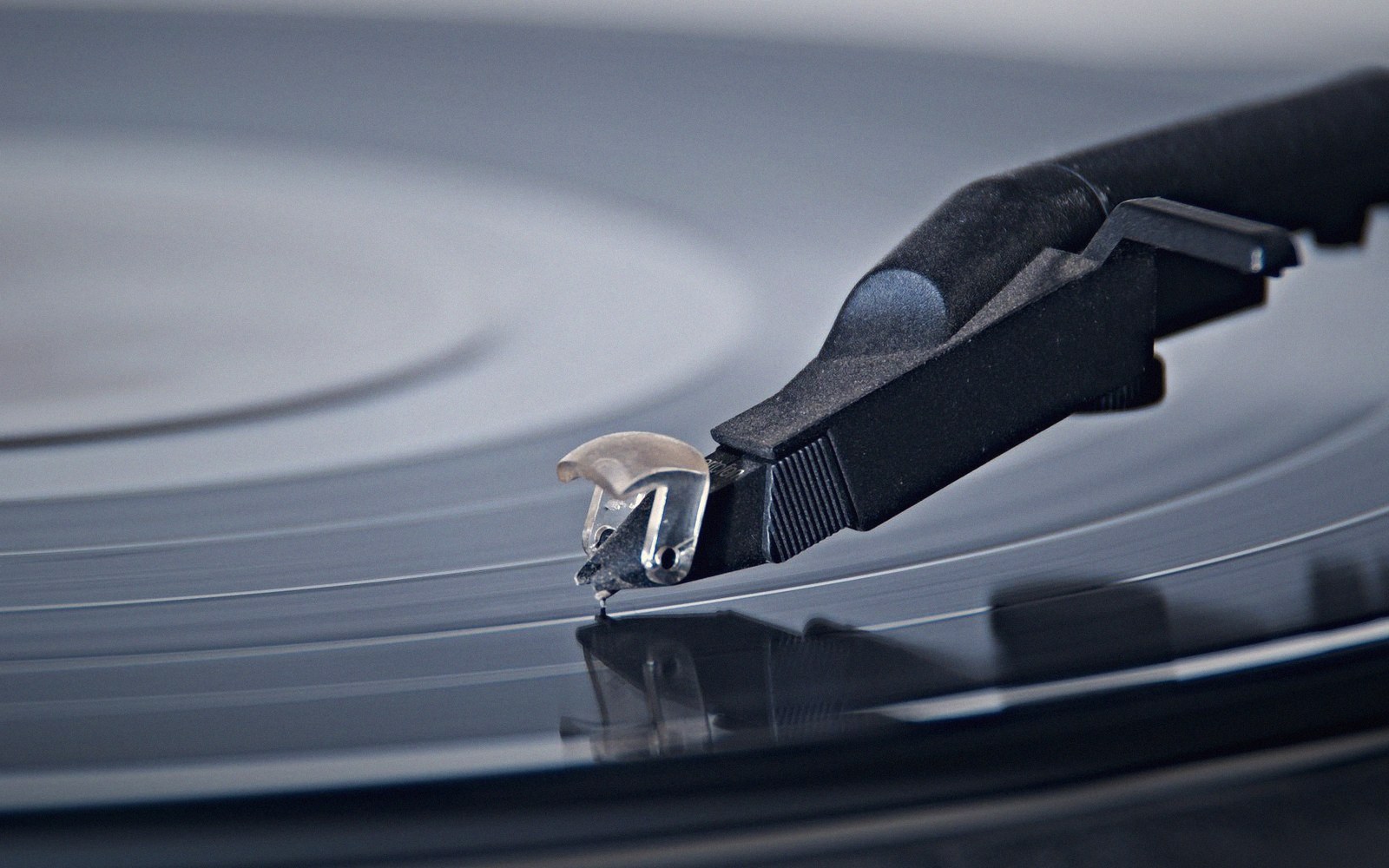
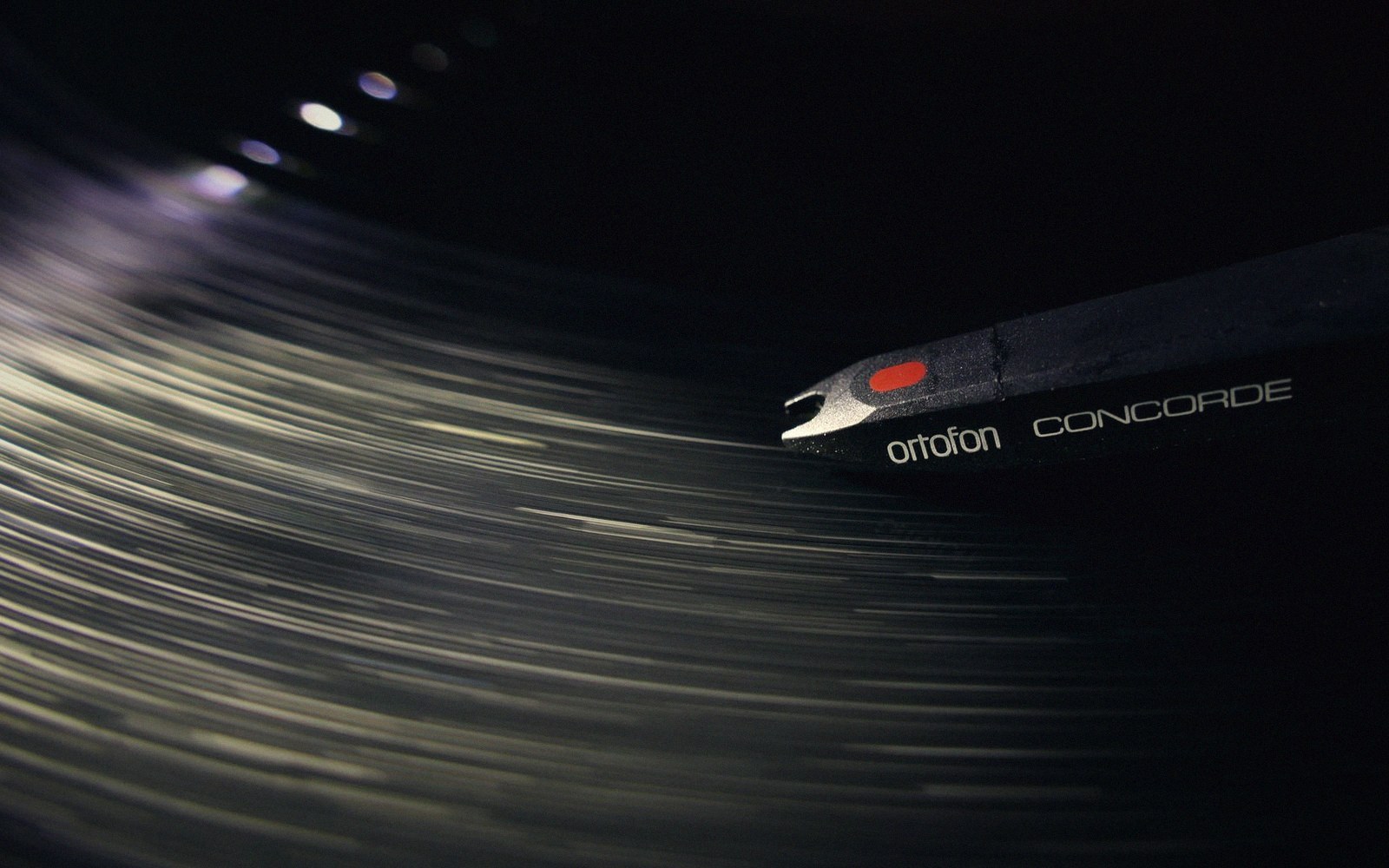
The practical question when working with shellac as a source rather than as an archive is how to transfer it. An electrical transfer using a ceramic or moving-magnet cartridge and a standard RIAA equalisation curve is not what most people in this practice want. The RIAA curve — developed in the 1950s as a playback standard for vinyl — will misread the equalization baked into older discs, which used different pre-emphasis curves depending on the label and the era. Playing a Columbia pressing from the 1930s back through an RIAA-corrected phono stage lifts the bass and softens the treble in ways the original cutter never intended. A flat transfer, or one matched to the disc's own period curve, preserves the recording's actual tonal shape, surface noise and all.
Some practitioners go further and use the turntable as a source in a more active sense — varying playback speed below or above 78 rpm, changing stylus size to read a different depth of groove, or running the transfer through a direct injection box rather than a phono stage at all. Slowing a 78 to 45 rpm drops the pitch by roughly a fifth and stretches time; the surface noise stretches with it, becoming a slower, lower crackle with more distinct gaps. The recorded signal, meanwhile, becomes something that no longer resembles its original performance in any simple sense.
Surface noise on a shellac disc is not uniform. Pressing quality varied by plant, by era and by how many times a disc was played before it was archived. A heavily played copy carries groove damage that shows up as clicks and broad-band noise spikes — rhythmically unpredictable, usable for exactly that reason. A lightly played copy from a careful archive may transfer almost cleanly through the crackle, leaving only the granular floor. Neither is more correct as a source. The choice is about what that layer of sound needs to do.
What a 78 transfers into a piece is a specific historical compression: a room, a microphone, a recording chain and a pressing compound, all of which are no longer made the way they were. That compression is not a degraded copy of something cleaner. It is the thing itself.